

Settlement views
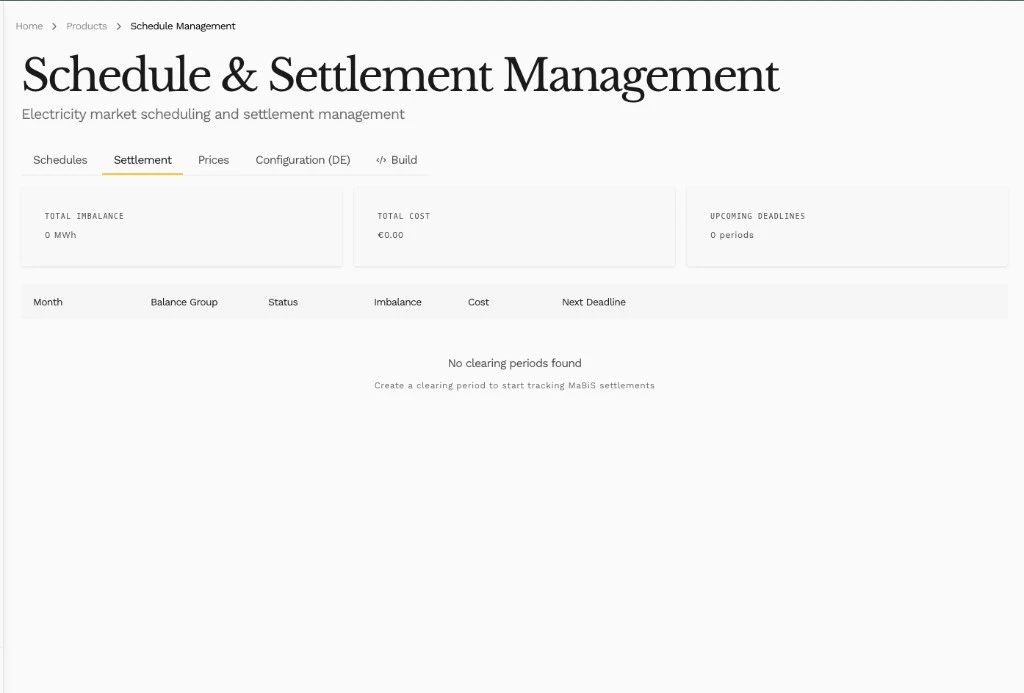
Settlement tab overview
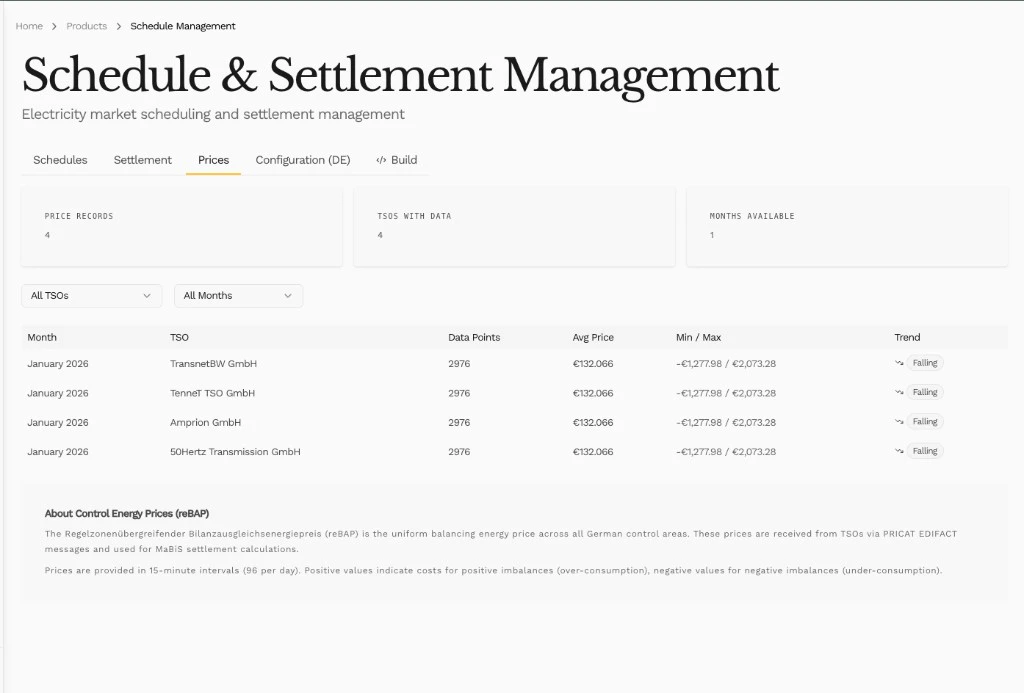
Control energy prices view
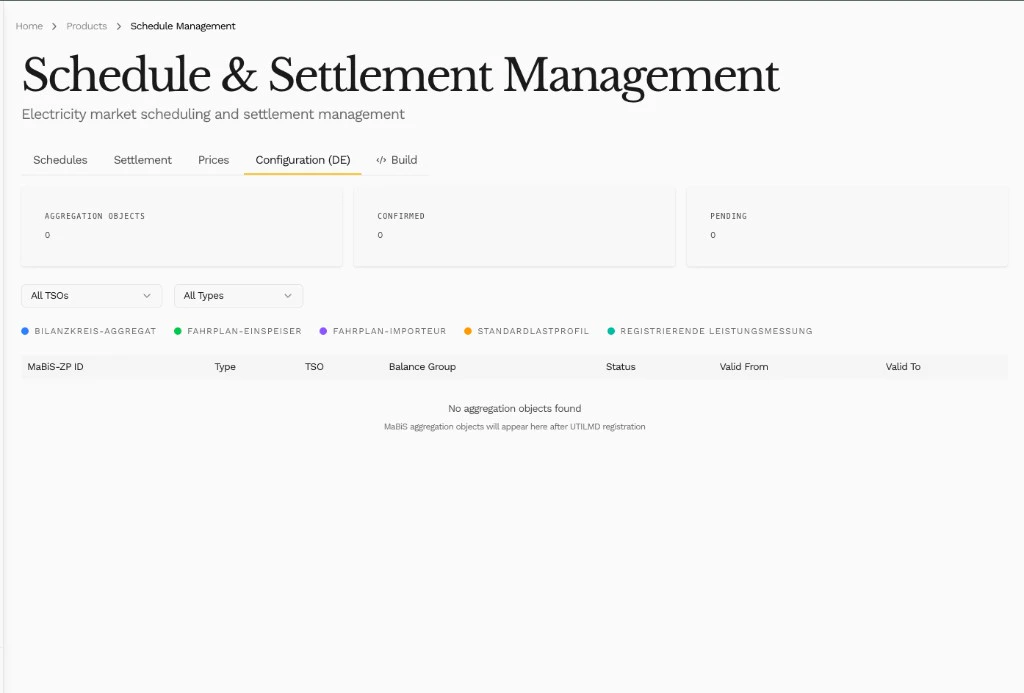
Aggregation object configuration view
DE vs NL at a glance
Germany (DE) - MaBiS-oriented settlement for BRPs
In DE, settlement is process- and role-driven. For BRP integrations, the key counterparties are NB, LF, BKV, and BIKO.What matters for a BRP without grid connection
- Role-based exchange: data and corrections move between defined market roles, not via direct grid-operation flows.
- State-based lifecycle: BIKO-managed states (for example
PruefdatenandAbrechnungsdaten) define processing stage and settlement readiness. - Built-in reconciliation loops: clearing and validation feedback are part of normal operation, including manual clarification in specific cases.
- Versioned traceability: state changes and payload revisions must remain auditable end-to-end.
DE implementation focus in this API
- Ingest and version DE settlement payloads.
- Expose reconciliation and objection workflows on top of process states.
- Keep a full audit trail from draft to settlement-grade records.
Netherlands (NL) - TenneT BRP imbalance settlement
In NL, BRP settlement is driven by the imbalance process and strict message validation in the TenneT ecosystem.What matters for a BRP without grid connection
- Imbalance-first model: settlement is computed per ISP from program vs allocation, then adjusted by activated services.
- Core series contract:
A20is the settlement base,A19is the aggregated adjustment, with supporting informational series as needed. - Two-step validation path: technical receipt first, functional acknowledgement second; rejected payloads are corrected and re-issued.
- Strict temporal rules: UTC intervals,
PT15M, and DST-aware92/96/100interval days.
NL implementation focus in this API
- Normalize TenneT/MMC-hub exchanges into actionable API states.
- Validate business-type semantics and interval completeness before downstream processing.
- Provide explicit breakdowns for imbalance, adjustments, and pricing.
Why this helps BRPs without grid connections
- You run settlement from market documents and balancing series without building separate DE/NL process engines.
- You use consistent API primitives for validation, reconciliation, objections, and traceability across both markets.
- You keep regulatory fidelity while maintaining a single integration layer.
Regulatory basis usedThis section reflects DE MaBiS process guidance and TenneT NL implementation guides for Schedule and Aggregated Imbalance Information.
API reference
Explore how to interact with the Settlement Management API